

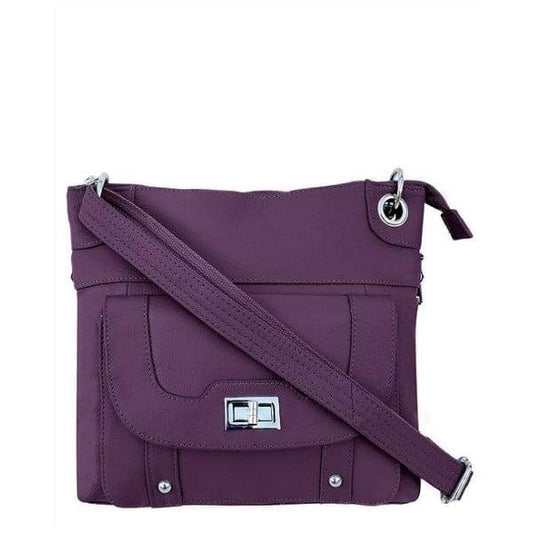

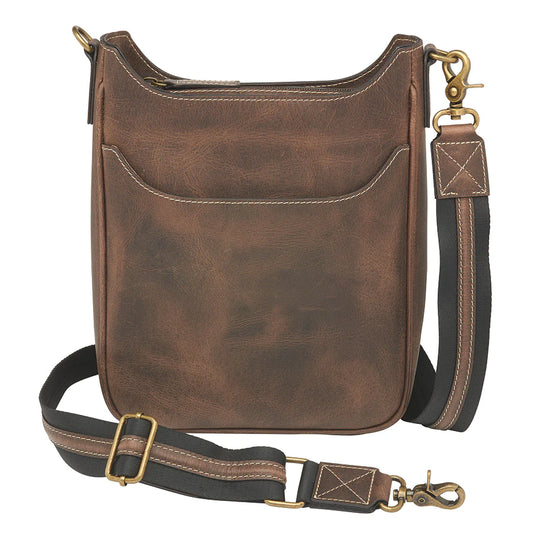


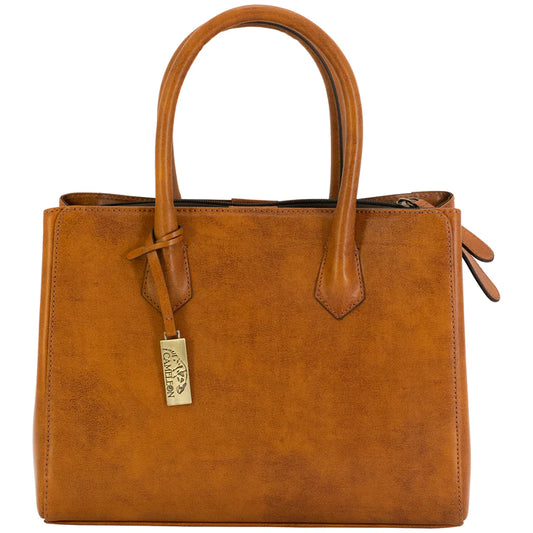

Premium craftsmanship

“Love the company and the woman who runs it The bags/purses are great quality and are very stylish! 10/10 definitely recommend!!”



A beautiful satchel should hold your life together, not turn it into a loose, cluttered gamble. If you are learning how to fit a handgun in a satchel, the goal is not simply making it fit. The goal is carrying it in a way that keeps the firearm protected, positioned, discreet, and separate from everything else you reach for during the day.
For fearless women, fashionable protection starts with a smart setup. A handgun should never float beside keys, lip gloss, chargers, snacks, or the rest of the essentials that make their way into an everyday bag. Your satchel can still look polished and feel like you, but the carry compartment has to be treated differently from every other pocket.
A standard fashion satchel may have plenty of room, but room alone does not make it safe for concealed carry. The right satchel has a dedicated firearm compartment that is separate from the main interior, lined or structured to hold a holster in place, and secured with a dependable zipper or lockable closure.
That separation matters. When your wallet and phone live in one compartment while your secured firearm lives in another, there is no reason for your hands to enter the carry area during normal errands. It also helps preserve concealment. A bag that looks like an ordinary leather satchel can carry beautifully without advertising what is inside.
Look for a shape that suits your daily routine. A structured satchel generally holds its form better than a soft, slouchy bag, which can make holster positioning more consistent. If you carry a larger handbag, make sure the firearm compartment does not sag or pull the silhouette out of shape once the bag is loaded. Style should feel effortless, not like an afterthought.
Your handgun belongs in its own compartment and in a holster made for that firearm. Do not place it loose in a zippered pocket, even if that pocket is empty. Loose carry can allow the firearm to shift, rotate, snag, or come into contact with objects that do not belong near it.
A quality holster should fully cover the trigger guard, retain the firearm securely, and attach firmly to the satchel's designated panel or system. Many concealed carry bags use hook-and-loop panels, adjustable holster mounts, or built-in retention arrangements. Follow the bag and holster manufacturers' instructions rather than improvising a setup with a generic pouch.
Before setting up your satchel, clear a clean workspace and follow safe firearm-handling practices. Verify the handgun is unloaded according to its manual and your training, and keep ammunition separate while you adjust the holster, test the bag, and check fit.
Start by measuring the practical space, not just the listed dimensions. A compartment may be long enough for your handgun but too narrow for the grip, holster, or zipper to close without pressure. You want enough clearance for the firearm to sit naturally in the holster, with no forced angles and no strain on the bag's seams.
Attach the holster so it stays stable when the satchel is carried, set down, or lifted from a car seat. The firearm should not shift from side to side or tilt as you move. If the bag includes adjustable mounting options, use the one that gives the holster the most secure contact with the compartment wall while keeping the zipper easy to operate.
Check that nothing presses against the trigger area and that the compartment closes completely. Then lift the bag by its handles, wear it over the shoulder or crossbody if the design allows, and move normally around your home. Sit, stand, bend, and set the bag down. You are looking for signs of shifting, printing, awkward weight distribution, or a compartment that becomes difficult to close.
A properly fitted setup should feel calm and controlled. You should not hear hardware knocking around, feel the firearm sliding to the bottom, or need to rearrange your bag each time you pick it up.
A satchel is often chosen because it has a refined, put-together look. Leather texture, polished hardware, a rich color, and a flattering shape all matter. You do not have to trade those details for a bag that looks tactical or oversized.
Still, carrying responsibly means being honest about capacity. An ultra-small satchel may be perfect for an evening out but may not comfortably accommodate your firearm, holster, wallet, phone, and daily essentials. Forcing too much into a compact bag can distort the exterior, wear out the zipper, and make the firearm compartment harder to manage.
A medium or generously sized structured satchel often provides the most versatility. It can keep your personal items organized in the main compartment while preserving a clean, dedicated space for the holstered firearm. If you are choosing between two sizes, think about what you carry on your busiest day, not your lightest one.
At Hiding Hilda, Fashionable Protection means considering the whole bag experience: how it wears, how it looks with your wardrobe, how it organizes your day, and how confidently it supports your personal safety plan.
It can be tempting to use the firearm compartment for a spare key, receipt, hand sanitizer, or other small item. Resist that temptation. The carry compartment should contain only the secured, holstered firearm and any components specifically intended by the bag's design.
Keep your phone, wallet, cosmetics, sunglasses, and keys in the main compartment or organizer pockets. This simple boundary reduces unnecessary handling around the firearm and makes daily organization much easier. You will always know where your essentials are, and you will not have to search near your carry setup to find them.
A satchel is off-body carry, which comes with a responsibility that differs from an on-body holster. The bag should remain in your immediate control at all times. Do not leave it in a shopping cart, under a restaurant table, on the passenger seat, or hanging unattended on the back of a chair.
When you are home, secure the satchel according to your household safety plan. If children, guests, or unauthorized people could access the bag, a lockable compartment alone may not be enough. Use appropriate secure storage and follow all applicable laws and household safety practices.
Be thoughtful about where the satchel sits in public, too. A crossbody strap can offer more control while walking, while hand-carrying may suit professional settings or quick trips. It depends on the bag, your outfit, your comfort, and your environment. The best choice is the one that keeps the bag close, stable, and consistently within your awareness.
Your setup is not a one-time project. Satchels experience real life: long commutes, crowded stores, spilled drinks, changing weather, and the constant motion of errands. A brief check before leaving the house helps catch small issues before they become distracting ones.
Confirm that the holster remains firmly attached, the firearm compartment zipper works smoothly, and the bag's straps, handles, and hardware show no damage. Check for loose stitching, worn hook-and-loop material, or a lining that has begun to pull away from the compartment wall. Leather and hardware deserve care, especially when the bag supports the added weight of a firearm.
Also consider your clothing. A satchel should complement your look without creating obvious bulges or an awkward pull at the shoulder. If it feels too heavy, the answer may be a better-sized bag, a different carry method, or a more streamlined everyday load. Comfort supports consistency, and consistency supports safer habits.
A well-designed satchel and secure holster are essential, but they do not replace training. Seek instruction from a qualified firearms professional on safe handling, applicable carry laws, storage, and the specific considerations of carrying in a bag. State and local laws can vary, including rules around permits, prohibited locations, and vehicle storage.
Practice your bag routine without ammunition present: opening and closing the compartment, checking that the holster stays put, and returning the bag to its normal secure location. Focus on deliberate, safe handling rather than speed. If your setup does not feel secure or intuitive, stop and adjust it before carrying it in public.
Your satchel can be soft leather, polished hardware, and perfectly your style. It can also be part of the confidence that comes from being prepared. Choose a bag that protects your essentials, respect the responsibility that comes with concealed carry, and carry every day like the capable woman you are.