

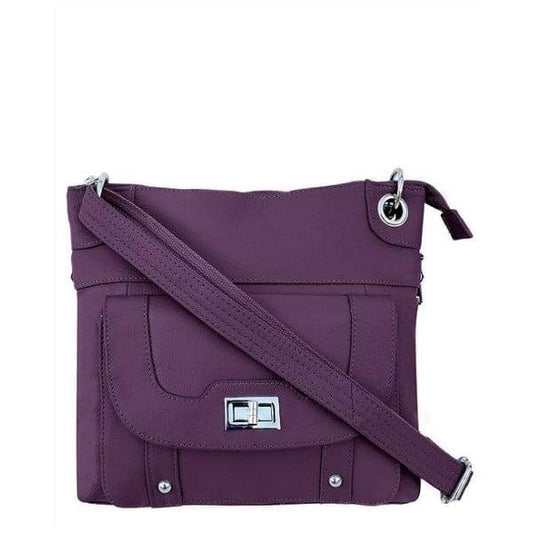

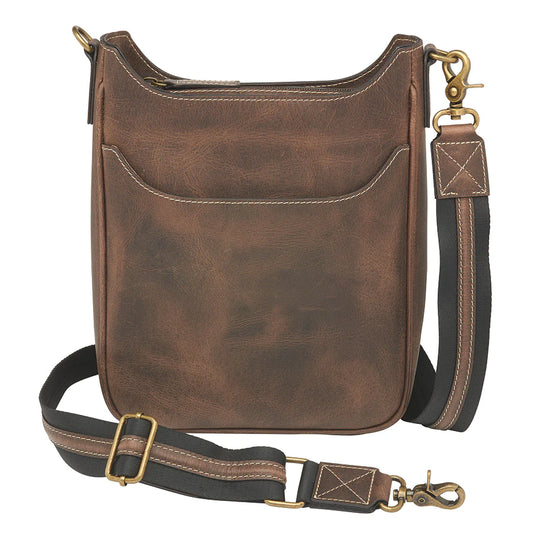


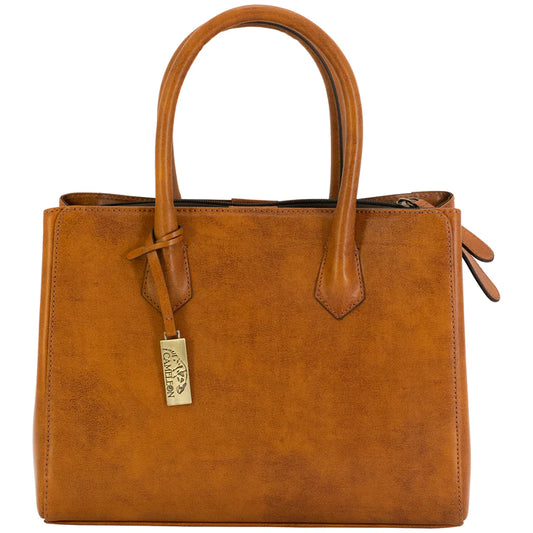

Premium craftsmanship

“Love the company and the woman who runs it The bags/purses are great quality and are very stylish! 10/10 definitely recommend!!”



A beautiful carry setup should make you feel prepared, not leave you wondering whether your firearm will stay secure when you bend for keys, reach for a child, or step out of the car. Knowing how to test holster retention gives you a simple, repeatable way to check that your holster holds your specific firearm securely while still allowing a deliberate draw.
Retention is not about making a firearm impossible to remove. It is about striking the right balance: secure during normal movement, accessible when you need it, and comfortable enough that you will carry consistently. Whether your holster lives inside a concealed carry purse, a waist pack, or on your body, that balance deserves your full attention.
Holster retention is the holster's ability to keep the firearm in place until you intentionally remove it. Some holsters rely on passive retention, created by a close, molded fit and friction around the firearm. Others add an active retention feature, such as a strap, thumb break, or other closure.
Neither style is automatically better. A passive-retention holster may offer a clean, efficient draw when it is properly fitted. An active-retention design can add reassurance for certain activities, but it also requires you to practice releasing the closure safely and consistently. The best option depends on your firearm, your carry method, your daily movement, and what you can confidently operate.
What should never be negotiable is a holster designed for your firearm's model and configuration. A generic pocket, elastic sleeve, or loose handbag compartment is not a substitute for a fitted holster. Your trigger guard must be fully covered, and the firearm should not shift, rotate, or work itself free as you move through your day.
Before you begin, choose a quiet, private place with no distractions, no people downrange of the direction you are handling, and a clear surface beneath you. If possible, use a dedicated inert training replica. If you are using your actual firearm, make sure it is unloaded and cleared according to the manufacturer's instructions before the test begins. Keep all live ammunition in another room.
Check the holster itself before placing anything inside it. Look for cracked leather, stretched elastic, loose stitching, worn hook-and-loop closures, bent clips, damaged hardware, or a strap that no longer fastens positively. Leather holsters can soften and change shape over time, especially if they have been exposed to moisture, heat, or daily compression inside a bag.
Place the unloaded firearm fully into the holster. It should seat completely without forcing it. Confirm that the trigger guard is covered and that nothing from the holster, lining, zipper, strap, or bag compartment can enter that area.
Start with the holster in the exact position where you plan to carry it. A holster may feel secure in your hand yet behave differently when clipped inside a waistband, attached to a purse insert, or secured in a dedicated carry compartment.
With the unloaded firearm holstered, hold the setup over a soft, clear surface. Gently angle it forward, backward, and side to side. The firearm should remain seated. You are not trying to fling or violently shake it out. You are checking whether ordinary changes in angle cause it to slide, creep, or loosen.
If it begins to move with light handling, the fit is too loose or the holster is not compatible with your firearm. Stop there. Do not try to solve a poor fit with improvised padding, tape, or a makeshift strap that could interfere with safe access or trigger coverage.
Put the carry setup on, or wear the bag as you normally would. Move deliberately through everyday motions: sit in a chair, stand up, bend to pick up a lightweight item, reach overhead, take a few normal steps, and turn from side to side. Keep the firearm unloaded throughout.
After each movement, visually check the holster. Has the firearm stayed fully seated? Has the holster shifted? Has a clip lifted, a strap opened, or a bag insert folded inward? A holster that stays put only when you stand perfectly still is not ready for your actual routine.
For belt and body-worn holsters, pay attention to whether the holster remains anchored as you establish a full grip and make a slow, controlled practice draw with the unloaded firearm. The holster should stay in place rather than coming out with the firearm. For active retention, the release should work only when you intentionally use it, not when clothing brushes against it.
A quality holster should maintain its opening well enough for careful, visual reholstering. Never rush this part, and never force a firearm into a holster. Clothing, purse lining, drawstrings, or a collapsed soft holster can create unsafe interference.
If your carry method requires you to remove the holster from your body or bag to reholster safely, that may be the right practice for that design. Convenience is never worth bypassing a safe process.
A concealed carry purse can be polished, feminine, and protective, but off-body carry asks more from you than simply placing a holster inside a compartment. The holster must be secured to the bag's designated carry area, and the bag must stay under your direct control.
First, inspect the attachment point. Whether the holster uses hook-and-loop material, a panel, straps, or another mounting system, it should lie flat and resist shifting when you open, close, and wear the bag. The firearm should not rotate toward the zipper, tip into the bottom of the compartment, or become tangled with the holster's retention strap.
Then test the compartment itself. Zip and unzip it several times. Carry the purse on your shoulder, crossbody, or by the handles as you normally would. Set it down gently, pick it up, and check whether the holster remains in its intended position. A quick-access compartment is only useful when your firearm is consistently oriented and the opening is not obstructed.
Keep the dedicated carry compartment dedicated. Cosmetics, receipts, keys, snacks, and personal items do not belong around a holstered firearm. A lockable compartment can add another layer of control when the bag is not on your body, but it does not replace responsible supervision. Off-body carry means your bag stays with you, not hanging unattended on a chair, resting in a shopping cart, or left within a child's reach.
At Hiding Hilda, fashionable protection is never meant to be careless protection. A beautiful leather crossbody or refined carry tote should support your confidence while keeping safe storage and consistent placement at the center of your routine.
A retention check is not a one-time task. Recheck your setup when you change firearms, add an accessory such as a light or optic, switch holsters, or notice wear. Even a small change in configuration can affect fit.
Watch for warning signs: the firearm rocks noticeably in the holster, the trigger guard is exposed, the holster collapses when empty, the retention strap has stretched, or the firearm comes free without a purposeful draw. Excessive resistance is also a problem. If you have to yank, twist, or fight the holster to remove the unloaded firearm, the setup may be too tight or poorly matched.
Leather deserves particular attention because it can break in over time. That graceful, lived-in look may be lovely on a handbag, but a carry holster still has a serious job to do. If the material has softened enough to compromise trigger coverage or retention, replace it rather than trying to extend its life.
Test retention again after a long drive, a busy travel day, seasonal wardrobe changes, or any time your carry setup feels different. A heavier coat, a new bag position, or a rushed morning can reveal a problem you would not notice at home.
Your carry style can be as polished as your life demands. Just make sure the protection behind it is fitted, secure, and checked with the same care you bring to everything else. Be your own hero by carrying with intention, not assumption.