





Premium craftsmanship

“Love the company and the woman who runs it The bags/purses are great quality and are very stylish! 10/10 definitely recommend!!”



A beautiful handbag should never make you choose between your personal style and your personal protection. Purse carry safety is about making sure your everyday carry stays discreet, controlled, and accessible to you - not lost beneath lip gloss, receipts, and the rest of real life.
Carrying in a purse can be a smart fit for women whose wardrobe, workday, or comfort needs make on-body carry impractical. It also asks more from you. A purse is removable, set down, and occasionally handed to someone else. Responsible carry means building habits that account for those realities before they become a problem.
A concealed carry purse is not simply a favorite handbag with extra room. The safest option has a dedicated firearm compartment that is completely separate from your personal items. Your phone, keys, cosmetics, wallet, and snacks should never share space with your firearm.
Look for a structured compartment with lockable zippers, durable construction, and an interior designed to hold a holstered firearm in a consistent position. A built-in holster or secure hook-and-loop holster panel helps prevent the firearm from shifting, rotating, or catching on loose items. The trigger guard must remain fully covered at all times.
Quick access matters, but it is not the same as careless access. The right bag lets you reach your firearm efficiently while still keeping the compartment secure from curious children, opportunistic thieves, and accidental contact. Choose an access orientation you can use naturally with your dominant hand, then practice with the exact purse you carry.
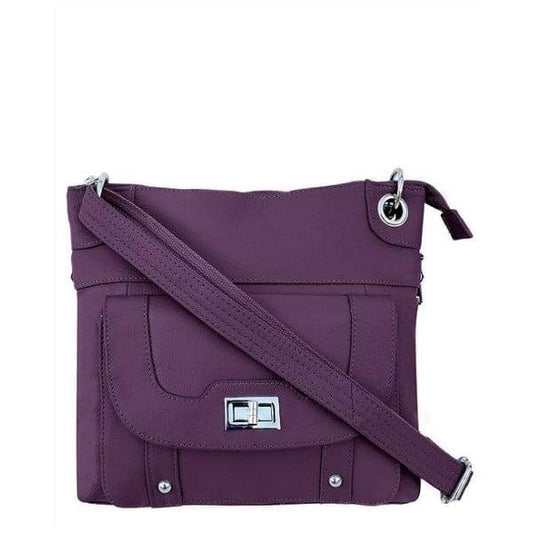
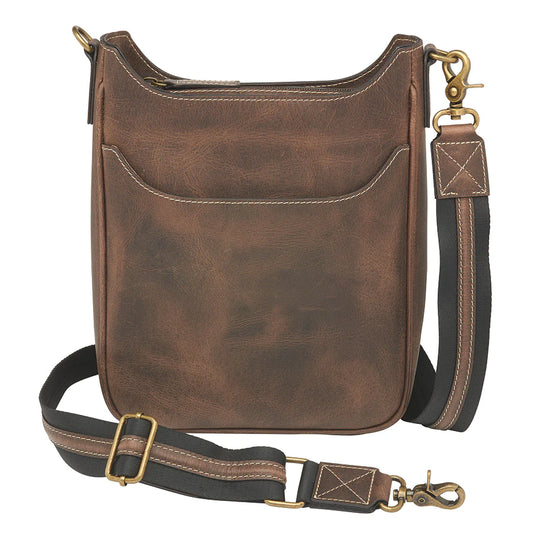
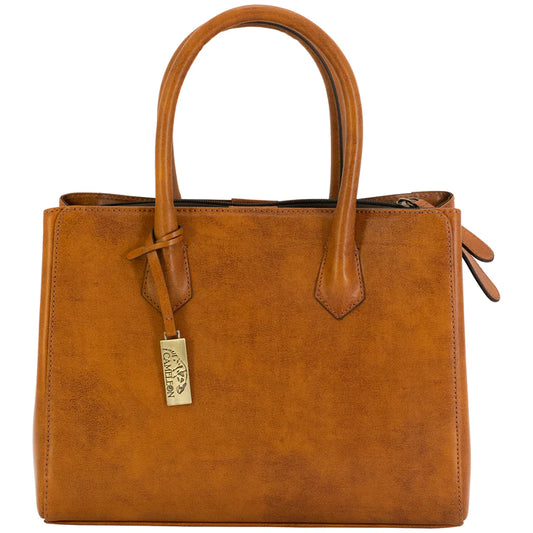
Style is part of the equation, too. A bag you genuinely want to wear is more likely to stay on your body and become part of a consistent routine. A refined leather crossbody, polished satchel, everyday tote, or compact sling can offer fashionable protection without announcing what you carry.
Your purse is your holster system. Treat it with the same seriousness you would give a holster worn on your waistband.
The simplest rule is also the most important: keep the purse on your body or in your direct physical control. Do not leave it in a shopping cart, drape it over a restaurant chair, place it in a public restroom stall, or set it on the passenger seat while you run into a store. Those ordinary moments create the greatest risk of theft, unauthorized access, or a firearm being forgotten.
A crossbody style can be especially helpful for busy errands, commuting, or managing children because it stays close and leaves your hands more available. That does not mean every situation calls for crossbody carry. A tote may work beautifully at the office, while a waist pack or sling can be more secure for travel, events, or active days. It depends on how often you will need to move, bend, lift, sit, and keep both hands free.
At home, do not make the mistake of assuming a familiar environment is automatically safe. If the purse is not on your body, secure the firearm according to your household safety plan. That may mean placing the entire purse in a locked space or removing and securing the firearm in an appropriate quick-access safe. A lockable purse compartment adds an important layer of protection, but it should not replace responsible storage.
Confidence comes from repetition, not from hoping you will figure it out when the pressure is on. A simple routine helps you avoid the small mistakes that can compromise safe carry.
Before leaving home, confirm that your firearm is secured in its dedicated holster, the trigger guard is covered, the compartment is zipped or locked as intended, and the bag is positioned for your preferred draw. Check that nothing has worked its way into the carry compartment. A receipt, pen, or loose key does not belong there - ever.
When you arrive somewhere, decide before you get out of the car how you will manage the purse. Bring it with you whenever possible. If you must secure your firearm in a vehicle, follow applicable laws and use a purpose-built, locked vehicle storage solution. A glove box or center console is not automatically secure, and a purse left visible in a vehicle can invite a break-in.
At the end of the day, repeat the process in reverse. Avoid tossing your purse onto a bed, couch, or entryway table where a child, guest, or pet could reach it. Responsible carry is not just what happens during an errand. It is the full chain of custody from the moment you leave home until your firearm is properly secured again.
A quick-access compartment only works if you know exactly how to use it. Practice your draw unloaded, with no live ammunition in the training area, until opening the compartment, establishing a firm grip, and drawing safely feel deliberate rather than rushed.
Start slowly. Learn where the zipper pull sits, how the bag moves when worn, and whether you need to stabilize it with your support hand. Notice how your coat, cardigan, seat belt, or arm position affects access. These details are where purse carry differs from on-body carry.
Professional training is worth the investment, especially with an instructor experienced in purse or off-body carry. The goal is not to become flashy or fast for its own sake. The goal is safe, repeatable handling under realistic conditions. You should also understand your state and local laws, the rules of places you visit, and any requirements tied to your permit or method of carry.
One honest trade-off: purse carry can be slower than a well-practiced on-body draw. That does not make it a poor choice. It means awareness matters even more. Maintain space when you can, pay attention to your surroundings, and do not let a sense of preparedness replace good judgment.
Purse carry requires clear boundaries around other people. Do not hand your purse to a friend to hold, ask a child to retrieve something from it, or let someone borrow it for a quick run to the restroom. Even people you trust may not know what is inside or how to handle the bag safely.
If you have children, teach age-appropriate firearm safety and create a household plan that everyone understands. Children should know never to touch a firearm and to alert an adult immediately if they encounter one. Your carry bag should also stay beyond their reach and under your control, even during the busiest family moments.
Be thoughtful in social settings, too. A crowded party, dressing room, playground, or salon can make it tempting to set your bag aside. Plan ahead. Select a bag that stays comfortably on you, or choose a secure storage option before you arrive. The safest choice is often made before you walk through the door.
Fashionable protection should support your life, not complicate it. At Hiding Hilda, that means choosing carry options made for women who expect more from their everyday accessories: polished style, purposeful organization, and protective features that do not look tactical.
The best purse for carry safety is not necessarily the largest, most expensive, or most heavily featured bag. It is the one that fits your firearm securely, stays in your control, works with your daily movement, and encourages the disciplined habits responsible carry requires. When your bag feels natural to wear and easy to manage, confidence follows - quietly, beautifully, and on your terms.