

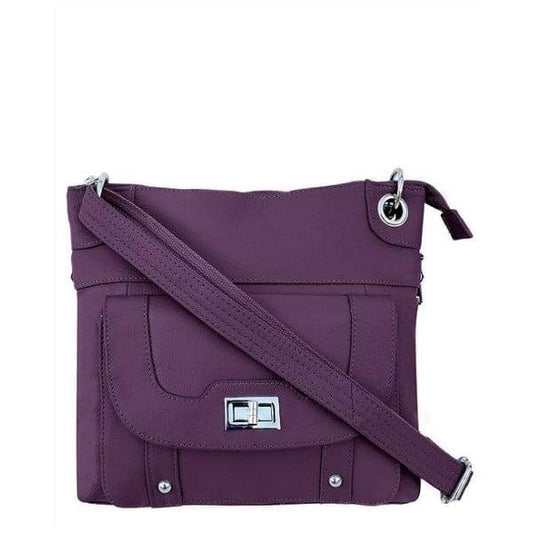

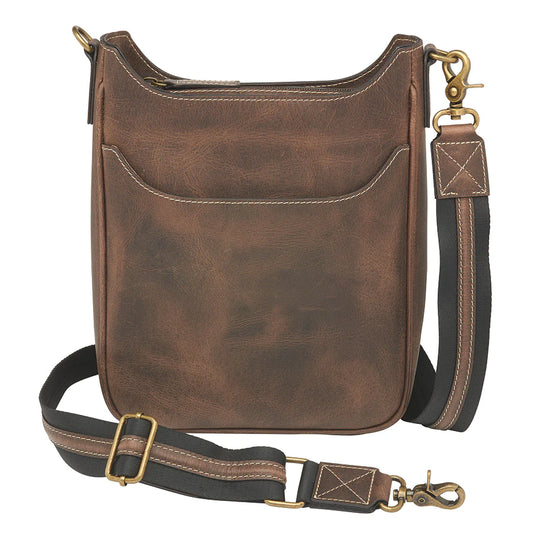


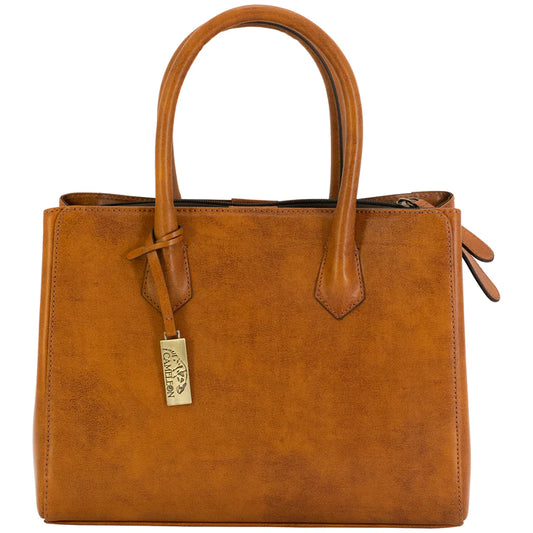

Premium craftsmanship

“Love the company and the woman who runs it The bags/purses are great quality and are very stylish! 10/10 definitely recommend!!”



A beautiful handbag should never make you choose between feeling polished and feeling prepared. But can purses safely carry firearms? They can, provided the purse is purpose-built for concealed carry and the person carrying it treats it as controlled equipment, not as a regular catch-all bag.
A concealed carry purse can be a smart choice for women whose wardrobe, comfort needs, workday routine, or body type make on-body carry difficult. It also comes with a non-negotiable trade-off: a purse can be set down, grabbed, or separated from you. Safe purse carry is less about the label on the bag and more about a secure design paired with consistent habits.
Yes, a purse can safely carry a firearm, but it is not automatically the safest option for every woman or every situation. On-body carry keeps the firearm physically attached to you, while off-body carry requires you to maintain direct control of the bag at all times.
That distinction matters. A firearm inside an ordinary purse can shift among keys, cosmetics, chargers, and other loose items. That creates avoidable risks: the trigger area may not be protected, the gun may be difficult to locate quickly, and someone else could access it if the bag is unattended.
A true concealed carry purse solves the equipment side of that problem with a separate, dedicated compartment and a secure holster. Your habits solve the rest. Fashionable protection is powerful when it is built around responsibility, not wishful thinking.
The first rule is simple: the firearm compartment should hold only the firearm and its holster. No lip balm, loose change, receipts, or spare phone cable belongs in that space. A dedicated compartment prevents clutter from entering the trigger area and helps keep the handgun consistently positioned.
The holster is the safety feature inside the purse, not an optional accessory. It should fully cover the trigger guard, retain the firearm securely, and be sized for the specific firearm you carry. A generic sleeve or an unsecured pocket is not a substitute.
The holster should also remain anchored in the compartment. If it slides, folds, or rotates when you move, the bag is not set up for reliable carry. Before relying on a purse in public, verify that the firearm stays oriented and protected through normal movement such as walking, sitting, getting into a vehicle, and lifting the bag.
Look for a carry compartment that is distinct from your everyday storage. Many quality concealed carry purses use lockable zippers or locking hardware, reinforced construction, and a lined interior designed to accommodate a holster.
Quick access matters, but it should never mean casual access. The right design allows the authorized carrier to reach the compartment efficiently while keeping curious children, opportunistic hands, and everyday clutter out. A bag that looks like a beautiful leather crossbody or tote while offering this level of separation gives you discretion without sacrificing function.
You do not need a bulky, obvious bag to carry responsibly. You do need sturdy straps, dependable hardware, and materials that can handle daily use. A flimsy strap, weak zipper, or loose compartment is a real security concern, no matter how pretty the purse may be.
A crossbody style can be especially practical because it keeps the bag close and makes it harder to casually leave behind. Backpacks, totes, and satchels can work well too, but they demand even more awareness because they are easier to remove or place down. Choose the style that fits your routine, then commit to the habits it requires.
The strongest concealed carry purse cannot protect you if it spends the day hanging on a chair, resting in a shopping cart, or sitting in an unattended vehicle. With off-body carry, the bag stays on your body or within your direct physical control.
That means your purse does not go in the child seat of a cart while you browse. It does not get draped over a restaurant chair. It does not become a shared family bag that a partner, teen, or friend may rummage through. If you need to take it off, secure it immediately in a manner consistent with your local laws and your household safety plan.
For everyday carry, these four rules deserve to become automatic:
If children are part of your household or regularly visit your home, purse carry requires an extra layer of planning. Children are naturally curious, and a handbag is one of the first places small hands may explore. A lockable carry compartment can help while the purse is under your control, but it is not a replacement for secure firearm storage when the bag is not being carried.
Set a household rule that your carry purse is never accessible to children. Do not leave it on a bed, floor, counter, or entryway bench. When you come home and decide not to keep the purse on you, move the firearm to an appropriate secure storage solution. Follow all applicable laws, and consider the needs of roommates, visitors, and anyone else who may enter your space.
The same rule applies at work, social gatherings, and family events. If your attention is divided, your bag may be vulnerable. A secure carry choice is one that reflects the environment you are actually entering, not just the outfit you planned to wear.
A concealed carry purse changes where and how you access your defensive tool. That is not something to figure out for the first time under pressure. Seek qualified, reputable firearms instruction that includes safe concealed carry considerations and local legal guidance.
Practice should begin safely and deliberately, following all firearm safety rules and using a verified unloaded firearm where appropriate. The goal is not flashy speed. The goal is familiarity: knowing exactly where your bag rests, where the carry compartment opens, and how to avoid compromising safe firearm handling.
You should also practice normal life with the purse. Wear it with the jacket you use on cold mornings. Sit with it in the car. Carry it through errands. Notice whether the strap is comfortable, whether the bag stays close to your body, and whether the firearm compartment remains separate from your essentials. A bag can be gorgeous, but if it is too heavy, awkward, or inconvenient, you may stop carrying it consistently.
Concealed carry laws vary by state and may change. Rules about permits, prohibited locations, vehicle storage, reciprocity, school zones, private businesses, and alcohol-serving establishments can all affect where and how you may carry.
Do not assume a lockable purse or a concealed compartment makes carry lawful everywhere. It does not. Review current state and local requirements, respect posted restrictions where legally applicable, and get knowledgeable legal or training guidance if you are unsure. Responsible carry means understanding the law as carefully as you understand your gear.
The best concealed carry purse is not necessarily the largest bag or the one with the most features. It is the one you can control, carry comfortably, and use consistently. Consider your daily environment, whether you are managing kids, commuting, working in an office, running errands, or traveling between appointments.
A compact crossbody may suit a hands-free day. A structured tote may make sense for work, provided the carry compartment remains separate and the bag stays with you. A backpack may offer excellent capacity, but it can be a poor fit if you routinely remove it in public. Be honest about your habits before choosing a style.
Hiding Hilda's approach to fashionable protection centers on that balance: refined bags designed to complement your life while giving responsible carriers a dedicated place for preparedness. You deserve options that feel feminine, capable, and made for the way you move through the world.
The right purse is not the one that merely hides a firearm. It is the one that supports your discipline, protects your privacy, and stays close enough to match the confidence you carry every day.