

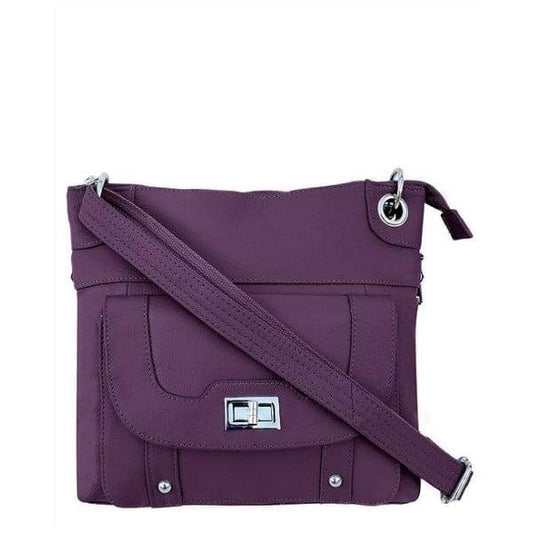

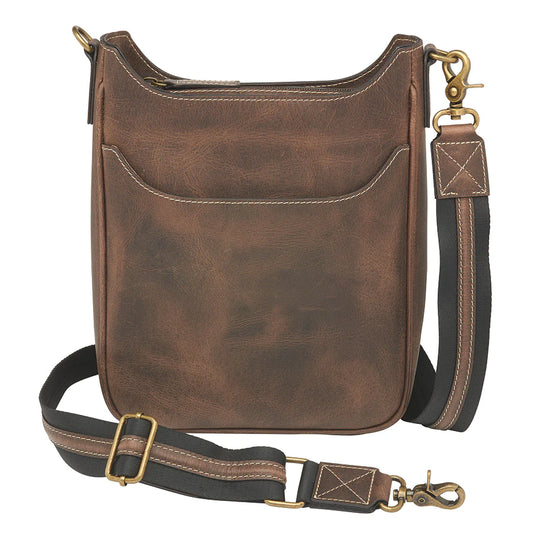


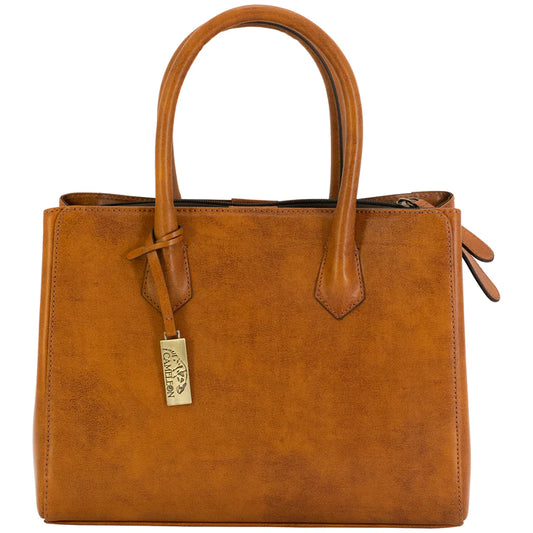

Premium craftsmanship

“Love the company and the woman who runs it The bags/purses are great quality and are very stylish! 10/10 definitely recommend!!”



The bag that looks perfect in the mirror can feel completely wrong halfway through a grocery run, school pickup, or a packed commute. That is why concealed carry backpacks versus slings is not simply a style question. Your choice affects where the weight sits, how naturally you move, how much you can bring along, and how consistently you can access your firearm safely.
For women who refuse to choose between preparedness and personal style, both options can be smart. The better choice is the one that fits your daily routine, your carry setup, and your ability to practice with it until its operation feels familiar.
A concealed carry backpack is built for capacity and balanced carry. Its shoulder straps distribute weight across both shoulders, making it a natural choice for long days, heavier essentials, travel, work, errands, or life with kids. A separate, lockable concealed carry compartment keeps the firearm apart from the items you reach for most.
A concealed carry sling is more compact and more body-conscious. Worn across the torso or back, it keeps essentials close without the fuller profile of a backpack. Many carriers like a sling for its grab-and-go simplicity and the ability to rotate the bag forward for access.
Neither is automatically faster, safer, or more fashionable in every setting. A well-designed bag with a dedicated compartment, secure holster, and intuitive zipper placement matters more than the label on the silhouette. So does the way you wear it.
A backpack earns its place when your everyday life already demands organization. If you carry a tablet, work supplies, a water bottle, snacks, a change of clothes, or a child's essentials, a sling can become overstuffed fast. An overloaded bag is not just uncomfortable. It can make it harder to keep the dedicated firearm compartment clear and accessible.
The best concealed carry backpacks make room for real life while preserving a protected space for your handgun. Look for a compartment that is separate from the main storage area, lockable when needed, and sized to accommodate a proper holster. A secure holster that covers the trigger guard is nonnegotiable. Your firearm should stay oriented consistently rather than shifting among keys, cosmetics, and daily clutter.
Backpacks also tend to feel better over a full day. Two straps spread the load, which can be especially welcome if you carry a larger firearm or spend hours walking through airports, festivals, campuses, or city streets. For moms, commuters, and frequent travelers, that extra capacity can feel less like bulk and more like freedom.
There is a trade-off. A backpack is typically slower to bring to the front of your body than a sling. It can also be easier to remove and set down, which creates a responsibility: maintain physical control of the bag at all times. Never leave a firearm-containing backpack unattended in a cart, under a restaurant table, or on a vehicle seat. If children are present, the lockable compartment and careful bag control become even more essential.
If tactical webbing, oversized logos, and boxy nylon do not fit your wardrobe, skip them. A leather backpack, a sleek nylon silhouette, or a polished vegan-leather design can offer concealed carry functionality without advertising what you carry. The goal is fashionable protection that belongs with your outfit, not gear that announces itself from across the room.
Details such as structured shapes, refined hardware, neutral colors, and practical interior pockets make a backpack feel like an intentional accessory. Hiding Hilda curates styles that understand this balance: you can carry responsibly and still look like yourself.
A sling is often the better match for lighter, faster-moving days. Think a walk with the dog, weekend errands, sightseeing, a casual lunch, or an event where you want your essentials close without carrying a full-size bag. Its compact form encourages you to edit down to what you truly need.
Because a sling sits close against your torso, many women find it easier to keep within their personal space in crowded places. When worn across the front, it can also discourage casual bag snatching and makes it easier to monitor zippers and pockets. For everyday awareness, that proximity is a meaningful advantage.
Access is the sling's biggest draw, but it deserves an honest qualifier. A sling can rotate from back to front efficiently, yet access is only useful if you have practiced with your exact bag, holster, clothing, and preferred carry position. Zipper direction, strap adjustment, handedness, and the bag's angle all affect the draw. Do not assume a bag is quick-access because the product description says so.
Practice unloaded and in a safe, lawful environment. Build the habit of keeping the muzzle in a safe direction, keeping your finger off the trigger until you have made the decision to fire, and reholstering only when the firearm compartment is clear. Responsible carry is confident, never careless.
A slim sling can become uncomfortable if you load it like a backpack. One shoulder and one strap carry the weight, so a heavy firearm plus a large wallet, charger, sunglasses case, water bottle, and extras can pull against your neck or shoulder. The bag may also shift as you bend, sit, or move quickly.
Fit matters. Adjust the strap so the bag stays close to your body without restricting movement or interfering with your seat belt. Test it while standing, walking, sitting in your car, reaching overhead, and bending down. If it slides, pinches, or lands in the wrong place every time you sit, it is not the right everyday carry companion.
Start with the firearm you carry, not just the bag you love. Measure your handgun with its holster in mind, including the grip, optic, light, or extended magazine if applicable. A compartment that barely fits can complicate the draw and put pressure on zippers or seams.
Then consider access from your dominant side. Some bags are designed for right-handed use, some for left-handed use, and some offer ambidextrous access. Choose a configuration that supports your natural movement instead of forcing you to work around it. An awkward setup is not one you will practice with, and an unpracticed setup is not one to trust.
Pay close attention to these four essentials:
Picture the last seven days, not an idealized version of your life. Did you carry lunch, a laptop, or kids' supplies? Did you spend long hours on your feet? Did you need one bag that could move from work to errands to dinner? A backpack likely gives you the breathing room you need.
If your days are more minimalist and mobile, a sling may feel more natural. It is easier to grab on the way out, lighter on your frame, and less likely to tempt you into hauling everything you own. For some women, the answer is not choosing one forever. A backpack for demanding days and a sling for lighter outings creates a practical rotation without sacrificing your personal style.
Whichever you choose, train with the bag before it becomes part of your routine. Learn every zipper by touch. Confirm that your holster stays secure. Practice safe access with an unloaded firearm, and follow all applicable federal, state, and local laws. Your bag should support sound judgment, not replace it.
The right carry bag is the one you will wear confidently, control responsibly, and reach for without hesitation. Choose the silhouette that fits your life, then make it unmistakably yours.