

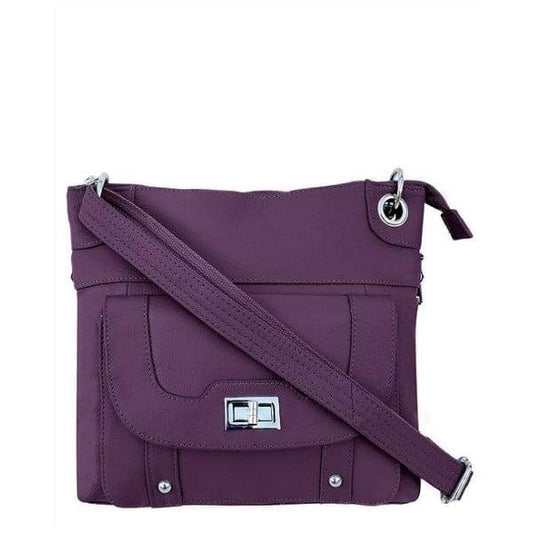

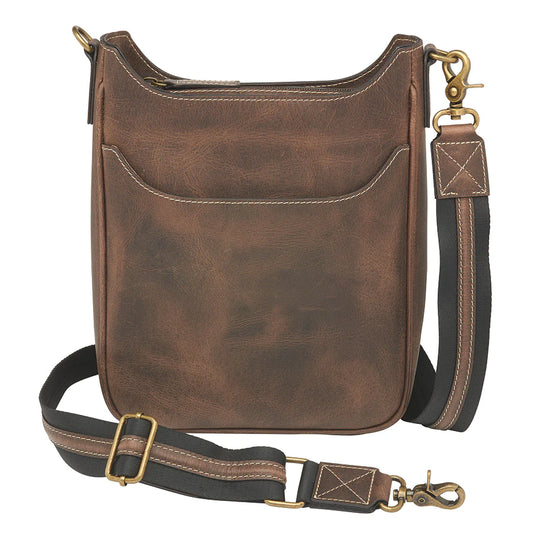


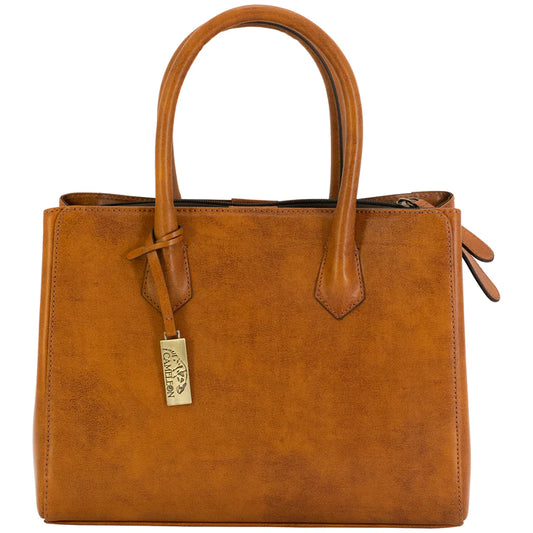

Premium craftsmanship

“Love the company and the woman who runs it The bags/purses are great quality and are very stylish! 10/10 definitely recommend!!”



A beautiful concealed carry bag should feel like part of your outfit, not a liability you have to watch every second. That is where knowing how to use purse tether protection matters. A purse tether gives you a practical way to secure your handbag to a fixed object while you are seated, helping reduce the chance of a quick grab-and-go theft.
For women who carry a firearm in a handbag, it is more than an accessory. Your purse is part of your personal-protection plan. A tether supports that plan by helping you maintain control of the bag when it cannot be on your body - at a restaurant table, a coffee shop, a salon, a sporting event, or a busy waiting area.
A purse tether is typically a cut-resistant cable or locking strap that loops around a stable object and attaches to your bag. Some versions have a key lock or combination lock; others use a clasp designed to connect to a reinforced ring or strap on the purse.
Its job is to create resistance against opportunistic theft. Someone who can normally snatch a handbag from the back of a chair or the floor beside a table now has to contend with an anchored bag. That extra barrier can discourage a thief and give you valuable seconds to react.
A tether is not a substitute for awareness. It does not make it wise to leave your bag unattended, drape it over a shopping cart, or set it in a public restroom stall. It also cannot make an unsecured firearm safe. If your handbag is designed for concealed carry, the firearm should remain in its dedicated, properly holstered compartment, with the trigger guard fully protected.
Think of a tether as one confident layer in a larger routine: keep your bag close, keep its carry compartment secured, and know exactly where it is at all times.
Before you head out, take a few minutes to practice at home. You do not want to be figuring out locks, cable length, or attachment points when you are trying to settle into a crowded restaurant.
Look for something fixed, sturdy, and difficult to lift or move. The base or leg of a heavy table is often a good choice. A solid chair frame may work if the chair is substantial and you will remain seated in it. Metal railings and permanent benches can also be options, provided the tether cannot simply slide off an open end.
Avoid lightweight café chairs, removable patio furniture, rolling office chairs, and anything a thief could carry away with the bag still attached. Also skip fixtures with sharp edges that could wear through a cable cover over time.
Pass the cable or strap around the chosen anchor point. Keep the loop as snug as the design allows. Excess slack makes the tether easier to maneuver, creates a tripping hazard, and can leave your bag farther away than it needs to be.
If your tether has a locking head, make sure it clicks or closes completely. Give the connection a quick tug before attaching your purse. That small habit helps you catch a partially latched lock before it matters.
Connect the tether to a reinforced metal ring, a designated tether loop, or a strong portion of the shoulder strap, depending on your bag and tether design. Follow the instructions that came with both products. Not every decorative ring, zipper pull, or thin strap is strong enough for this purpose.
For a concealed carry handbag, do not attach the tether through the zipper pulls of the firearm compartment. That can interfere with access, damage the zipper, or create a problem when you need to move the bag. The tether should secure the bag itself, not obstruct its intended quick-access function.
Place the handbag where you can maintain visual and physical control. At a restaurant, that usually means against the inside of your leg or at your feet beneath the table, rather than hanging behind you. Keep straps, cables, and handles clear of walkways.
If you carry off-body, position the concealed carry compartment in the direction that gives you the most controlled access. The right setup varies by bag style, dominant hand, seating arrangement, and your training. The goal is not speed at the expense of safety. The goal is consistent control.
Engage the lock, then test the setup with a firm pull. The bag should not slide freely away from you or detach from the anchor point. Keep the key on your person, not inside the purse. If you use a combination tether, choose a code you can recall under stress without writing it down in your bag.
Once the tether is in place, do not let it give you false confidence. Continue to watch who is nearby, especially in crowded spaces. If a person is hovering, bumping into your table repeatedly, or trying to distract you while another person gets close to your bag, trust your instincts and leave.
Tethers are especially useful when you need both hands free for a short time. A dinner out, a laptop session at a café, a doctor’s waiting room, or a child’s activity can all create those moments when setting a bag down feels unavoidable.
They are also helpful when traveling. Hotel lobbies, airport gate areas, convention centers, and roadside stops can be distracting places where bags are easy to grab. Still, be mindful of venue rules and security procedures. A tether should never interfere with an evacuation route, block an aisle, or complicate your ability to leave quickly.
For everyday errands, wearing your crossbody bag close to the body is usually the better option. A tether is most useful when you are stationary. It is not meant to turn a purse into something you drag behind you or attach to yourself while walking.
A purse tether works best alongside a thoughtful concealed carry routine. Keep the firearm in a dedicated holster compartment, separate from keys, makeup, pens, and other loose items. A crowded compartment can compromise trigger protection and slow down access.
Never hand a concealed carry purse to a child or leave it with a friend who does not know there is a firearm inside. When you are in a location where you cannot legally carry, follow applicable laws and use secure storage appropriate to your situation. Responsible carry means planning for transitions, not improvising when you arrive.
Practice is equally important. With an unloaded firearm and in a safe setting, familiarize yourself with opening the bag, establishing a safe grip, and re-securing the compartment. Seek qualified firearms training that includes off-body carry if you are new to carrying in a purse. A stylish bag can support your preparedness, but skill and sound judgment are what make the system work.
The most common mistake is attaching a tether to a weak point on the bag. A thief may not need to defeat the cable if they can simply pull a thin strap, decorative ring, or zipper tab free. Use reinforced hardware whenever possible.
Another mistake is placing the bag where the tether is hidden but the purse is not. A handbag hanging off the back of a chair can still be opened, bumped, or tampered with, even if it cannot be carried away. Keep it beside you, in front of you, or beneath the table where you can notice movement.
Finally, do not tether your purse in a way that prevents you from leaving promptly. If the environment starts to feel wrong, you should be able to unlock or disconnect the tether calmly and move. A security tool should support your freedom of movement, not take it away.
A purse tether is a small detail with a strong message: your style is yours, your safety is yours, and your bag stays under your control. Choose a setup that fits your handbag, practice using it until it feels natural, and carry every day with the confidence of a woman prepared to be her own hero.