

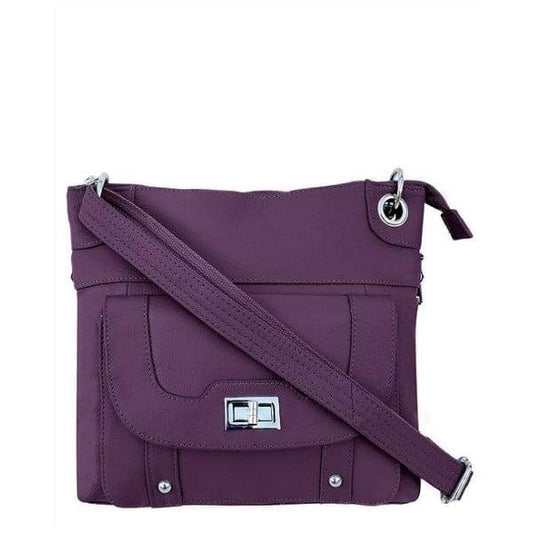

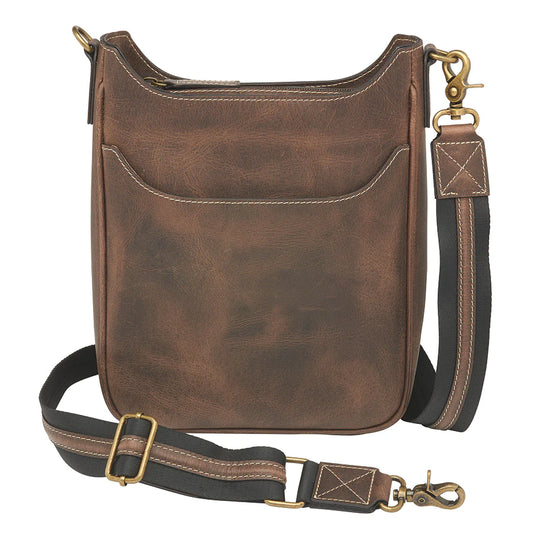


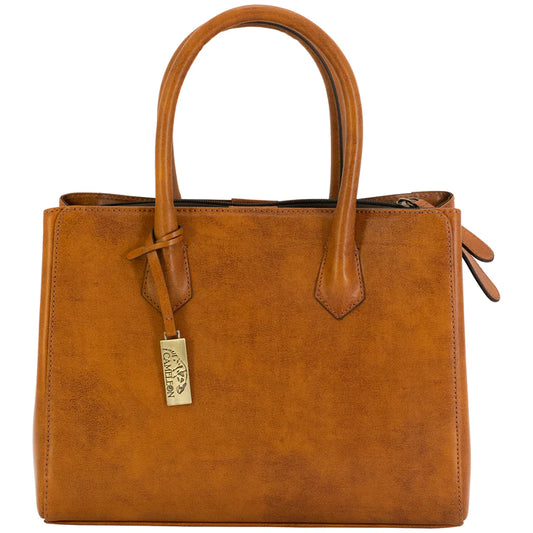

Premium craftsmanship

“Love the company and the woman who runs it The bags/purses are great quality and are very stylish! 10/10 definitely recommend!!”



A concealed carry bag should never feel like an open invitation to curious hands. Whether you carry a polished leather crossbody, a roomy tote, a backpack, or a waist pack, learning how to lock a concealed carry bag is part of carrying responsibly. The goal is not to make your bag impossible to access. It is to add meaningful protection when the bag is out of your direct control, especially around children, guests, coworkers, or public spaces.
A lock is one layer of a smart carry routine. Pair it with a dedicated firearm compartment, a properly fitted holster, situational awareness, and knowledge of your local and state laws. Fashionable protection should still be responsible protection.
Before choosing a lock, inspect the concealed carry compartment itself. The safest setup is a dedicated section designed only for your firearm, not a general pocket shared with lipstick, keys, snacks, or electronics. A purpose-built compartment helps prevent objects from shifting against the firearm and keeps your everyday essentials from blocking access.
Many concealed carry purses and bags use dual zipper pulls that meet at the center. This design allows you to secure the two pulls together with a small lock. Some bags include a built-in locking mechanism, while others have lockable zipper pulls or reinforced hardware made for this purpose.
If your bag does not have two zipper pulls that can be secured together, do not force a lock onto the fabric or hardware. A lock that strains the zipper, leaves a large opening, or damages the bag is not a reliable solution. Consider using a compact locking case inside the bag instead, or choose a bag specifically designed with a lockable concealed carry compartment.
The best lock depends on where and when you need it. A small keyed padlock can be simple and dependable, but you must keep track of the key. A resettable combination lock removes the need for a key, which many everyday carriers prefer when they are moving between work, errands, school pickup, and home.
Look for a lock with a short shackle that fits through both zipper pulls with minimal extra space. A long shackle can make it easier for someone to manipulate the zipper pulls or create enough movement for the compartment to open slightly. The lock should be sturdy enough for daily use without being so oversized that it weighs down your bag or catches on clothing.
For a bag that may be left in a vehicle, a cable lock can add another layer by securing the bag to a fixed anchor point. Still, a cable lock does not make a vehicle a safe storage solution. Vehicles are vulnerable to break-ins, temperature extremes, and forgetful moments. If you must secure a bag in your vehicle, keep it out of sight and follow all applicable laws and workplace or property rules.
Avoid novelty locks, lightweight luggage locks, and locks with easy-to-guess combinations. The purpose is to slow unauthorized access and discourage opportunistic handling, not to add a decorative accessory.
A keyed lock works well if you want a straightforward system and have a consistent place to keep the key. Some women attach the key to a separate keyring rather than storing it in the concealed carry bag itself. If the bag and key are together, the lock offers far less protection.
A combination lock can be convenient, but only if you can reliably remember the code without writing it inside the bag or saving it in an obvious place. Choose a code that is meaningful to you but not easily connected to your birthday, address, or phone number.
The actual process is simple, but the details matter. Build the same routine every time so securing your bag becomes second nature.
1. Confirm the firearm is in a secure holster. The holster should cover the trigger guard, stay positioned inside the compartment, and keep the firearm oriented consistently. A lock cannot replace a proper holster.
2. Clear the dedicated compartment of loose items. Keep phones, wallets, pens, makeup, and other daily carry items out of the firearm section. This protects both your gear and your ability to access the compartment when needed.
3. Close the compartment fully. Pull both zipper sliders all the way to their intended meeting point. Check that no lining, fabric, or strap is caught in the zipper.
4. Thread the lock through both zipper pulls. The lock should pass through the openings in both pulls, holding them together. Close the lock, scramble the combination if applicable, and give it a gentle tug to confirm it is engaged.
5. Keep the bag under your control. Locking is not permission to leave your bag unattended. Carry it on your body when possible, or place it in a secured location when you cannot keep it with you.
That final step is where responsible carry becomes personal. A bag may look like a beautiful everyday accessory, but it contains an item that deserves your full attention.
A concealed carry bag is not meant to remain locked every moment of the day. If you are legally carrying and relying on the bag for immediate personal protection, a locked compartment can delay access. That trade-off needs to be considered carefully based on your environment, training, local laws, and personal safety plan.
Many carriers lock the bag when it is stored at home, placed in a vehicle, set aside at a friend’s house, or kept anywhere children or unauthorized adults could reach it. They may keep the compartment unlocked only when the bag is worn securely on the body and remains in their direct possession.
There is no one-size-fits-all rule. What matters is making an intentional decision rather than treating the lock as an afterthought. If you live with children, have frequent visitors, or share a home with people who should not access your firearm, a lockable bag is especially valuable. It should also be supported by appropriate secure storage at home, such as a locking safe or lockbox.
A locked bag placed on a shopping cart, restaurant chair, stroller handle, or office floor can still be stolen. The lock protects the compartment, but it does not protect the entire bag from walking away.
Wear crossbody bags close to your body, with the firearm compartment positioned where you can keep awareness of it. For backpacks and totes, avoid leaving them behind a chair or under a desk where they are easy to grab. If you need to remove the bag, place it in a locked drawer, cabinet, safe, or other secured space whenever possible.
At home, avoid hanging your bag on a doorknob, leaving it in an entryway, or setting it on a bed where a child can reach it. A consistent arrival routine helps: come in, secure the firearm appropriately, and put the bag in its designated place. Confidence comes from habits you do not have to debate every day.
Leather, zippers, snaps, stitching, and lock hardware all deserve occasional attention. A beautiful concealed carry purse can see a lot of real life - commuting, errands, travel, school drop-off, dinners out, and everything in between. Over time, zipper pulls can bend, lock openings can wear, and fabric liners can catch.
Once a month, test the locking system with the bag unloaded and empty. Make sure the zipper closes smoothly, the lock clicks firmly, and the compartment cannot be easily opened once secured. If the zipper pulls are damaged or the lock no longer fits correctly, repair or replace the hardware before relying on it.
Hiding Hilda customers choose fashionable protection because they refuse to choose between looking put together and being prepared. That same mindset belongs in your locking routine: intentional, capable, and never careless.
Practice securing and unlocking the bag only in a safe, private setting and with the firearm unloaded, following established firearm safety practices. Learn how the lock feels in your hands, how the zipper moves, and where the key or combination is kept. This prevents fumbling when you are tired, distracted, or in a hurry.
Just as importantly, practice deciding when the bag should be on your body, when it should be locked, and when it belongs in more secure storage. A concealed carry bag is a powerful tool for independence, but responsible ownership means planning for the moments when you cannot keep it within reach.
The strongest carry setup is the one you can live with consistently: a bag you love to wear, a holster that keeps the firearm secure, and a lock routine that protects what matters when your attention has to be somewhere else. Be Your Own Hero - and make responsible storage part of your everyday style.