

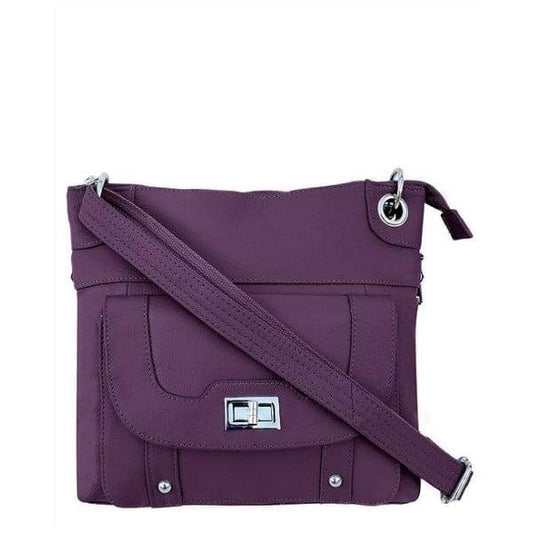

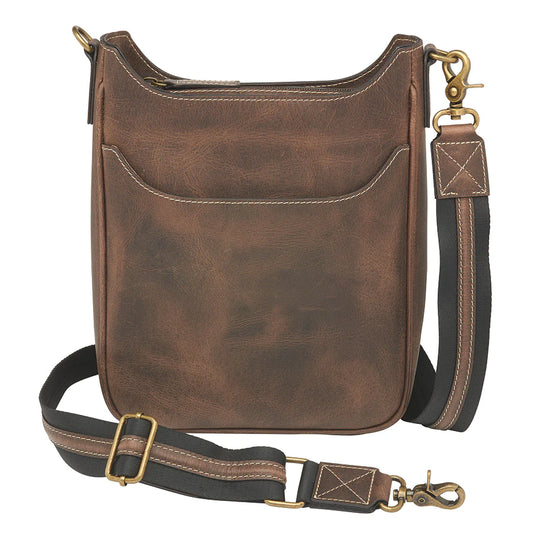


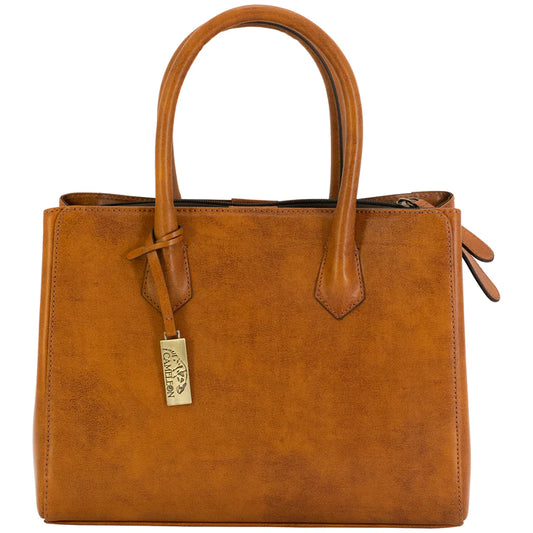

Premium craftsmanship

“Love the company and the woman who runs it The bags/purses are great quality and are very stylish! 10/10 definitely recommend!!”



A purse that looks perfect on the shelf can feel completely wrong the moment you add your everyday essentials and a compact handgun. If you are asking what size purse fits compact handgun carry, the answer is usually not “the biggest bag you can find.” It is the smallest fashionable bag that gives your firearm its own secure, accessible space without turning your daily carry into a bulky burden.
For many women, that sweet spot is a medium crossbody, satchel, shoulder bag, or tote with a dedicated concealed carry compartment. The right choice should support your style, your routine, and your responsibility. You should feel polished walking into work, running errands, or picking up the kids - and confident that your protection is carried securely.
Compact handguns vary more than many shoppers expect. Grip length, slide length, mounted accessories, and the holster all affect the room you need. That is why the purse’s concealed carry compartment matters more than the bag’s overall outside measurements.
As a practical starting point, look for a dedicated compartment that is at least 1.5 to 2 inches longer and taller than your unloaded, holstered handgun. That extra room prevents a tight, awkward fit and leaves space for the holster to sit flat. The compartment also needs enough depth to protect the firearm without making the purse look overstuffed.
For most compact carry setups, a purse around 10 to 12 inches wide and 7 to 9 inches tall is often the most versatile range. These medium-size bags tend to provide a separate firearm compartment while preserving enough room for a wallet, phone, keys, cosmetics, and the small essentials that actually come with you every day.
A smaller purse can work for a very slim compact handgun, but it leaves little margin for error. If the compartment is too snug, the zipper may catch, the bag can lose its shape, and access becomes less consistent. A larger tote may fit nearly any compact handgun with ease, but it can be heavier, less convenient in close spaces, and easier to set down when you should not.
A handbag product photo can be deceiving. A roomy main compartment does not automatically mean there is enough room for safe concealed carry. Your firearm should never share open space with lip balm, pens, keys, sunglasses, or anything else that can interfere with a secure holster.
Before choosing a bag, measure your unloaded firearm according to its manufacturer’s safe-handling guidance, including the holster you intend to use. Then compare that measurement with the interior dimensions of the concealed carry compartment. Exterior measurements include leather thickness, gussets, trim, and pockets, so they can make a bag appear roomier than its usable carry space.
The compartment should allow the handgun to remain in a fitted holster with the trigger guard fully covered. It should also keep the gun positioned consistently rather than shifting around when you move. A well-designed concealed carry purse uses holster-friendly lining, mounting panels, or securing features that help the firearm stay where it belongs.
Do not overlook the opening. A compartment that technically fits your handgun but only opens halfway is not a good fit. Look for an opening that gives you a clear, repeatable way to access the holstered firearm. Quick-access design should feel intentional, not improvised.
A concealed carry purse needs two kinds of capacity: firearm capacity and real-life capacity. If carrying your compact handgun means stuffing your phone, wallet, and keys into every remaining inch, the purse is probably too small for your routine.
On the other hand, carrying a huge bag just because it has a large firearm compartment may create a different problem. Extra weight can pull at your shoulder, make a crossbody strap uncomfortable, and tempt you to leave the bag in a cart, at a table, or in the car. The best size is one you will keep close and under your control.
The same compact handgun can require a different purse size depending on how you carry the bag. Shape, strap length, and how often you move through your day all matter.
A medium crossbody is a favorite for women who want hands-free security while commuting, shopping, traveling, or managing a busy family schedule. Worn close to the body, it can be easier to keep in your personal control than a loose shoulder bag. Choose one with a structured concealed carry compartment and a wide, comfortable strap that will not dig in once the bag is loaded.
A satchel gives you a more polished, office-ready look while offering enough structure for organization. It is a smart choice when you need a bag that transitions from professional settings to dinner, appointments, or everyday errands. A satchel is often slightly roomier than a crossbody, so it works well if you carry a planner, tablet, or extra personal items along with your compact handgun.
A tote offers generous capacity and can be a strong choice for work, travel, or motherhood. Still, bigger is not always better. Choose a tote with a clearly separate, zippered concealed carry section rather than an open interior where everything mingles together. If you use a tote, be especially disciplined about keeping it on your body or within immediate reach.
A sling bag or waist pack can be an excellent answer for active days when a traditional purse feels cumbersome. These styles sit close to the body, keep your hands available, and can offer a more secure feel during walks, outings, and travel. The key is selecting a model designed specifically with a concealed carry compartment, not trying to force a firearm into an ordinary fashion bag.
At Hiding Hilda, the goal is Fashionable Protection: bags that complement a woman’s life instead of asking her to dress around a tactical-looking accessory. A refined leather crossbody, a structured satchel, or a lightweight everyday bag can all work beautifully when the concealed carry features are built in with purpose.
A purse that fits your compact handgun is not automatically a purse that carries it responsibly. Off-body carry requires more attention than carrying on your person because the bag can be removed, set down, or accessed by someone else.
Choose a bag with a dedicated, lockable firearm compartment when that feature fits your needs. Use a holster made for your specific firearm, and keep the trigger guard completely covered at all times. Never place loose items in the firearm compartment, even temporarily. A separate compartment is not a convenience feature alone - it is a boundary that protects you, your gear, and everyone around you.
The bag should stay in your direct control. If children are part of your household or daily routine, secure storage becomes even more essential whenever the purse is not physically on you. Follow all applicable federal, state, and local laws, and practice safe, lawful handling with qualified instruction.
When your new purse arrives, do not judge the fit while it is empty. Place your unloaded, holstered firearm in the dedicated compartment, then add your normal daily essentials. Wear the bag the way you truly plan to wear it: crossbody, on the shoulder, or in hand.
Notice whether the purse stays balanced, whether the strap remains comfortable, and whether the firearm compartment stays separate and easy to identify by feel. Check that zippers operate smoothly and that the bag keeps its intended shape. A bag that feels elegant and organized at home is far more likely to become the bag you reach for every day.
Your carry purse should not announce what it does. It should simply move through your life with you - beautiful, dependable, and ready to support the confidence of a woman who chooses to Be Her Own Hero.