

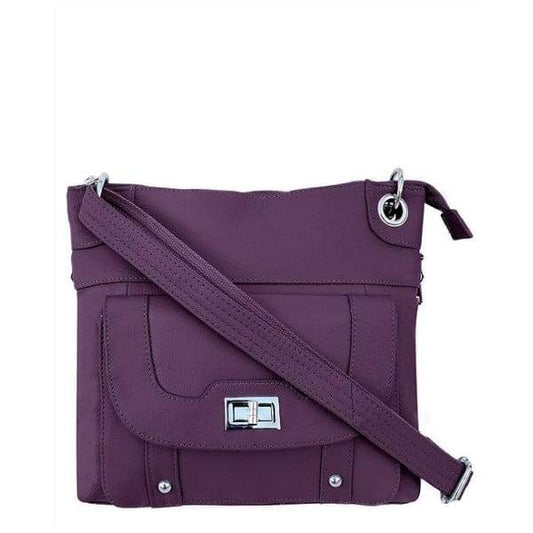

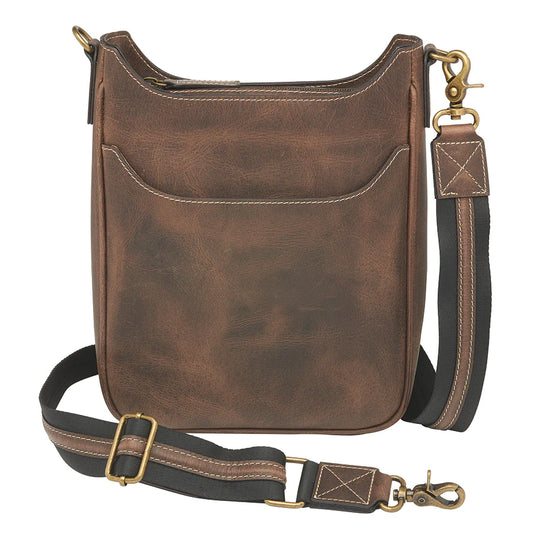


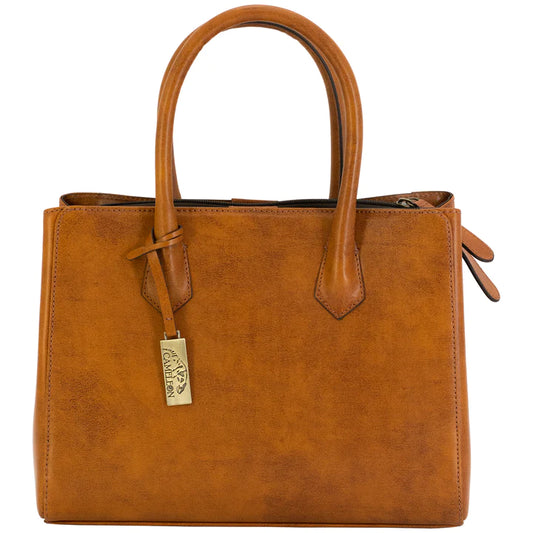

Premium craftsmanship

“Love the company and the woman who runs it The bags/purses are great quality and are very stylish! 10/10 definitely recommend!!”



A handbag can have beautiful hardware, buttery leather, and a zipper at the top, yet still offer very little control over who can access what is inside. That distinction matters when you carry valuables, medications, personal documents, or a concealed firearm. What makes handbags lockable is not simply the presence of a lock. It is a purposeful combination of hardware, compartment design, access points, and construction that helps you carry with greater confidence.
For women who choose fashionable protection, a lockable handbag should feel polished on your shoulder and reassuring in your hand. It should support responsible carry without turning your everyday style into a tactical statement.
A truly lockable handbag has an access point that can be secured against casual opening. In most cases, this means two zipper pulls that meet at the opening of a compartment and include aligned holes or loops for a small padlock. Once locked together, the zipper pulls cannot separate, keeping the compartment closed.
That sounds simple, but the details make the difference. A single zipper pull with a decorative clasp is not necessarily lockable. A magnetic snap, turn-lock closure, or buckle may keep a bag shut during normal use, but it often does not provide the same level of controlled access. Those closures are stylish and convenient, yet they are not designed to prevent someone from opening the bag.
In a concealed carry purse, the lockable feature should apply to the dedicated firearm compartment, not merely the main fashion compartment. This separation is a major part of responsible purse carry. Your wallet, phone, keys, cosmetics, and firearm should not compete for the same space.
A well-designed lockable carry compartment typically includes four elements:
Lockable zipper pulls are the most recognizable feature, but their quality deserves a closer look. The pulls need to meet cleanly, with openings large enough to accommodate an appropriately sized padlock. If the zipper track catches, the pulls do not align, or the holes are too small for a practical lock, the feature becomes more frustrating than protective.
Look for smooth, substantial zippers with durable pulls rather than thin, decorative hardware that bends under pressure. Metal zipper pulls are common, but material alone does not guarantee quality. The important question is whether the zipper assembly feels secure, closes reliably, and works easily enough that you will use it when needed.
The zipper path matters, too. A compartment with two zippers that meet at the center can be easier to lock than one with a single pull. On some handbag styles, a locking zipper may run along the top edge. On others, especially concealed carry purses and crossbody bags, it may follow the side or back wall of a dedicated compartment. Neither layout is automatically better. The right choice depends on how you wear the bag and which direction feels natural for your draw and daily routine.
This is the trade-off every responsible carrier should understand. A handbag lock can discourage casual access and add a valuable layer of control around children, curious hands, and opportunistic tampering. It does not turn a handbag into a certified firearm safe, nor should it be treated as a substitute for secure storage at home, in a vehicle, or anywhere the bag will be left unattended.
A small lock can also slow access. That may be exactly what you want when the bag is stored beside you, carried around children, or placed in a shopping cart for a moment. But it may not be appropriate for every carry situation. Your personal safety plan, local laws, level of training, and the environment around you all matter.
The strongest approach is intentional use. Lock the dedicated compartment when added access control is the priority. Keep the bag on your body or within your direct control whenever possible. Never assume a lock alone makes it appropriate to leave a firearm in an unattended purse, vehicle, or public space.
A standard handbag can sometimes be modified to carry a firearm, but that is not the same as a bag designed for the task. Loose carry in a main compartment creates unnecessary risks: the firearm can shift, become tangled with other items, or be accessed while you are reaching for something completely unrelated.
A purpose-built concealed carry handbag provides a dedicated area that keeps the firearm away from the contents of your day. Many designs use a hook-and-loop panel so you can position a compatible holster for your preferred carry orientation. This helps protect the trigger area and promotes consistent placement.
The compartment should also be large enough for your firearm and holster without forcing either into an awkward angle. A bag that is too small can bulge, print, or make access difficult. One that is overly large can allow too much movement if the holster is not properly secured. Fit matters just as much as the lock.
For everyday carry, think beyond the firearm itself. Consider whether the bag has room for the essentials you actually bring: a phone, wallet, glasses, planner, snacks for the kids, or work items. A handbag that is functional only for carry day is less likely to become the bag you reach for every morning.
The best lockable handbag is one you can use confidently without overthinking every motion. Before choosing a style, picture your ordinary day. Do you commute, travel, run errands with children, work in an office, or spend long stretches driving? Do you prefer a shoulder bag, crossbody, backpack, sling, or tote?
Crossbody bags can keep your carry close and hands free, but you should check how the compartment sits when the strap is adjusted to your preferred length. Totes offer room for busy days but may require more attention to organization and retention. Backpacks can distribute weight comfortably, yet a rear-access carry compartment may not suit every access preference. There is no one right silhouette, only the one that works with your wardrobe, movement, and training.
Practice matters. With an unloaded firearm, following all firearm safety rules, familiarize yourself with the bag's zippers, compartment placement, holster position, and retention. If you carry concealed, seek qualified instruction specific to your firearm and carry method. A stylish bag should support your readiness, never replace it.
Leather handbags offer a refined look, structure, and long-term appeal. Quality faux leather and durable nylon styles can also be excellent choices, especially when you want lighter weight or weather-friendly performance. The material is personal. Construction is nonnegotiable.
Check the stitching around the carry compartment, strap anchors, zipper seams, and any points that bear extra weight. A handgun, holster, lock, and daily essentials add up. A bag should feel balanced when loaded, with straps that remain comfortable and hardware that does not twist or pull.
Interior lining deserves attention as well. A dedicated compartment should resist snagging and make it easy to see or feel where your holster is positioned. The best designs blend that utility into a handbag that still looks like it belongs with your favorite coat, office outfit, or weekend denim.
Lockable handbags give you one more way to carry responsibly while keeping your personal style intact. The right design pairs lockable zipper hardware with a separate, holster-ready compartment and dependable construction. It respects the fact that security is personal, and that a woman should not have to choose between feeling prepared and feeling like herself.
Choose a bag that fits your routine, train with the carry method you select, and let your accessories reflect the same strength you bring to every part of your day. Be Your Own Hero, with fashionable protection that works as hard as you do.