

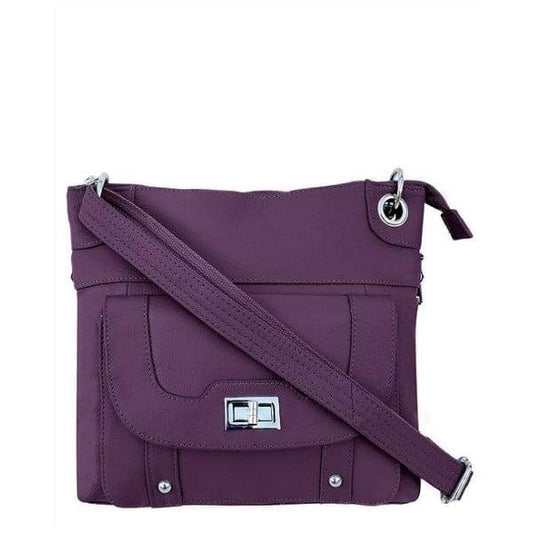

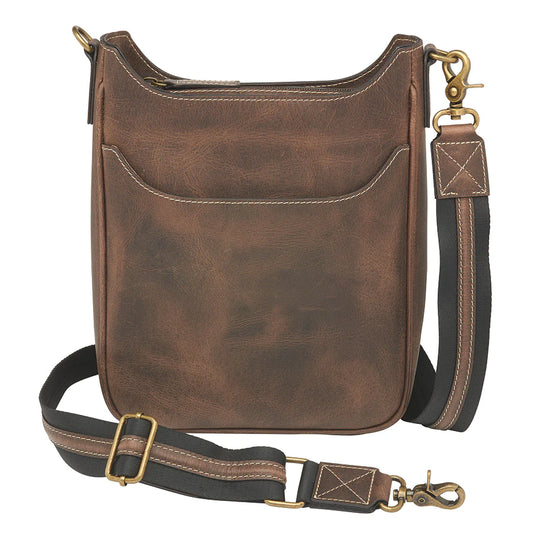


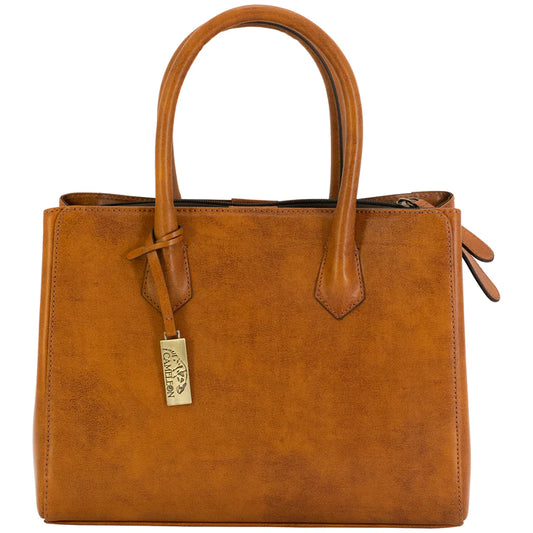

Premium craftsmanship

“Love the company and the woman who runs it The bags/purses are great quality and are very stylish! 10/10 definitely recommend!!”



The wrong purse makes you work harder when seconds matter. A beautiful bag that blocks cards from digital theft but buries your firearm under receipts, lip balm, and a tangled keychain is not doing its job. The right RFID concealed carry purse gives you both - polished style on the outside and purpose-built protection where it counts.
For many women, that balance is the whole point. You want a bag that fits your life, not a tactical compromise that fights your wardrobe. You also want practical security: RFID protection for your cards, a dedicated concealed carry compartment, and access that feels fast, natural, and controlled. Fashionable Protection should still perform under pressure.
An RFID concealed carry purse combines two distinct features. First, it includes RFID-blocking material in designated card slots or wallet sections to help prevent unauthorized scanning of credit cards, IDs, and passports. Second, it includes a separate firearm compartment designed for discreet, secure carry.
Those two features solve very different problems, which is why they need to be evaluated separately. RFID shielding helps protect personal information. A concealed carry compartment supports safer, more consistent off-body carry. One should not distract from the other.
That matters because shoppers sometimes see RFID and assume the entire bag is built around security. It is a good feature, but it does not automatically mean the purse is well designed for defensive readiness. The carry compartment, holster setup, orientation, and access path still deserve the most attention.
If you carry off-body, access is everything. A purse can be gorgeous, lightweight, and beautifully organized, but if the gun compartment is awkward to reach, too tight, or easy to obstruct, the bag is working against you.
Look closely at where the concealed carry pocket sits and how it opens. Many women prefer a dedicated side or back compartment with zipper access that can be reached by the dominant hand without dramatic repositioning. Others like ambidextrous access because it offers more flexibility depending on how the purse is worn. There is no single perfect layout. It depends on your draw style, your daily routine, and whether you carry on the shoulder, crossbody, or by the handles.
Quick access should still be controlled access. A compartment that opens easily for you should not open carelessly for everyone else. Locking zippers or lockable firearm sections can add peace of mind, especially around children, in busy public spaces, or during travel. That added security is worth the extra step for many women, but it can also slightly slow access. This is one of those real trade-offs that deserves an honest look.
A concealed carry purse that stays in the closet is not helping anyone. If the silhouette feels too bulky, too stiff, too tactical, or too far removed from your personal style, you will be less likely to carry it consistently.
This is where design earns its keep. A well-made bag should blend into your everyday wardrobe instead of announcing itself. Clean lines, quality leather, modern hardware, and wearable shapes make a difference. So does proportion. A larger tote may feel roomy and versatile, while a crossbody can feel more secure and easier to keep close. A satchel may offer structure and polish, while a sling or backpack may better fit an active routine.
The goal is not to force one look. The goal is to choose a purse that feels like you, while still supporting responsible carry. Fearless Women do not need to choose between confidence and style.
One of the fastest ways to end up frustrated is buying a bag based on looks alone without checking whether it fits your firearm properly. A compartment that is too small can create printing, poor retention, or difficult access. A compartment that is too large can allow shifting if the holster system is not secure.
Start with your actual setup, not your idealized one. Consider the dimensions of your handgun, whether you use a trigger guard or hook-and-loop holster, and whether you need room for accessories. Then think about everything else you carry in real life. Wallet, phone, sunglasses, keys, snacks, medications, and daily essentials all compete for space.
Bigger is not always better. A large tote can carry more, but it can also become heavy, cluttered, and slower to manage. A compact crossbody may feel streamlined and controlled, but only if it fits your firearm and essentials without crowding the dedicated compartment. The best choice is the one you can carry comfortably and organize intentionally.
RFID-blocking technology is a smart feature for women who carry cards, IDs, and passports in the same bag every day. It adds another layer of confidence, especially for commuting, travel, crowded events, and busy retail environments.
Still, it helps to be clear about what RFID protection does and does not do. It is designed to reduce the risk of wireless skimming from RFID-enabled cards. It is not a replacement for overall bag security, good awareness, or smart organization. And depending on the bag, RFID shielding may only be built into specific sections rather than throughout the entire purse.
That is not a flaw. It is simply a design detail worth checking. If RFID matters to you, confirm whether the protected area covers the card slots you will actually use. A purse with a dedicated RFID wallet section can be extremely practical, but only if it matches the way you carry your essentials.
A purse can meet every feature requirement on paper and still fail in daily life if it is uncomfortable. Weight distribution, strap width, bag structure, and carry style all affect whether you reach for it day after day.
Leather often brings durability, structure, and elevated style, but it may weigh more than some synthetic options. A wide shoulder strap can reduce strain, while an adjustable crossbody strap helps keep the bag close and stable. A softer bag may feel more flexible and wearable, while a structured purse can make organization easier and preserve a cleaner silhouette.
Think about your routine. If you spend long hours commuting, walking, shopping, or managing kids, comfort is not a bonus feature. It is part of safety. A bag that constantly slips, swings, or tires your shoulder becomes a distraction. A bag that feels secure and balanced lets you stay focused.
Everyday carry gets messy fast. The fix is not endless pockets. It is smart separation.
Your firearm should have its own dedicated compartment and should not share space with personal items. That sounds obvious, yet plenty of women settle for bags where essentials migrate everywhere and create unnecessary interference. Inside the main body of the purse, look for enough structure to keep your routine items easy to find without overcrowding the carry section.
This is also why quick-access compartments for phones, keys, and small items matter. When the bag is organized well, you are less likely to unzip the wrong section, dig around in a hurry, or expose the carry compartment unnecessarily. Good organization is about control.
Quality construction does more than elevate the purse. It supports reliable daily use. Strong stitching, durable zippers, reinforced straps, secure hardware, and well-finished interiors all matter more when the bag is carrying weight and serving a protective purpose.
A concealed carry purse asks more of its materials than an ordinary handbag. It needs to maintain structure, hold up to repeated access, and keep its shape under daily wear. Cheap construction tends to show itself at the worst possible time - sticky zippers, sagging compartments, or straps that do not inspire confidence.
This is where trusted concealed carry brands and thoughtfully designed collections stand apart. A bag should feel intentional from the first zip to the last stitch.
Some women want a sleek crossbody for daily errands. Others need a roomy tote that carries work essentials along with discreet protection. Some prioritize a lockable compartment above all else. Others care most about a lightweight build, premium leather, or a shape that blends effortlessly into a polished wardrobe.
That does not mean the decision has to feel complicated. It just means the best RFID concealed carry purse is the one that fits your firearm, your body, your habits, and your style without asking you to compromise more than you should. At Hiding Hilda, that is the standard worth holding.
Choose the purse that helps you move through your day with more confidence, not more guesswork. When your bag is built for both elegance and readiness, carrying feels less like a trade-off and more like exactly what it should be - smart, capable, and completely your own.